In Part 1 of Why Africa Should Have a Place on the Next Generation of Space Stations, I explained that the International Space Station is expected to remain operational until 2030, with its controlled deorbit currently planned for 2031. I also presented our vision for Africa to establish a dedicated research facility aboard one of the commercial space stations being developed to succeed it.
One important area of research could be the development of more affordable and efficient solar technologies. Experiments conducted in microgravity could help scientists study new photovoltaic materials and manufacturing processes with potential applications on Earth. Africa possesses some of the world’s richest solar resources, yet it accounts for only a small proportion of global installed solar capacity. More efficient and affordable solar technologies, supported by local manufacturing, could help expand access to electricity for the hundreds of millions of Africans who remain without it.
Access to energy is fundamental to development. Electricity powers refrigerators that preserve vaccines, provides light for students studying at night, and supports the workshops, laboratories, and industries where the next generation of engineers and innovators will learn and work.
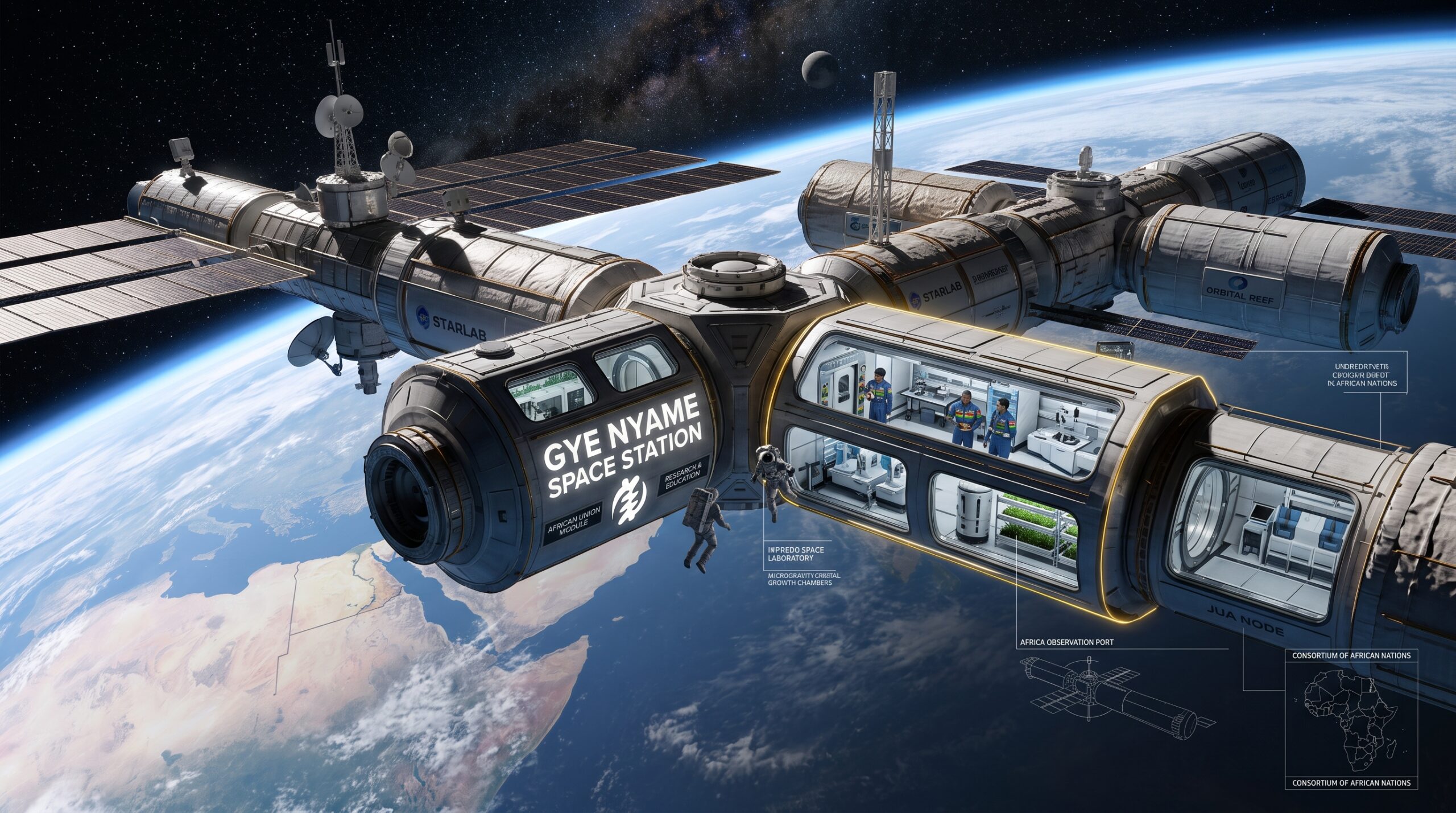
Another section of the lab experiments with growing high-quality semiconductor crystals in microgravity. On Earth, gravity causes fluids to move and mix. When a crystal is growing, those movements can interfere with the process. In microgravity, there is much less of this movement. The material can remain more stable while the atoms slowly arrange themselves. These crystals may develop with fewer imperfections than those produced on Earth, where gravity can impede the formation process. The research could contribute to cheaper and more efficient solar panels for Africa, which has more abundant solar resources than any other continent.
The Gye Nyame segment could also include an Earth-observation system focused on Africa. As the station passes over the continent, its instruments could collect data on environmental changes such as the shrinking of Lake Chad, the health of the Congo Basin’s forests, and the development of floods and droughts. Africa would be observing Africa on its own terms, strengthening the continent’s ownership of the data used to understand its environment and shape its future.
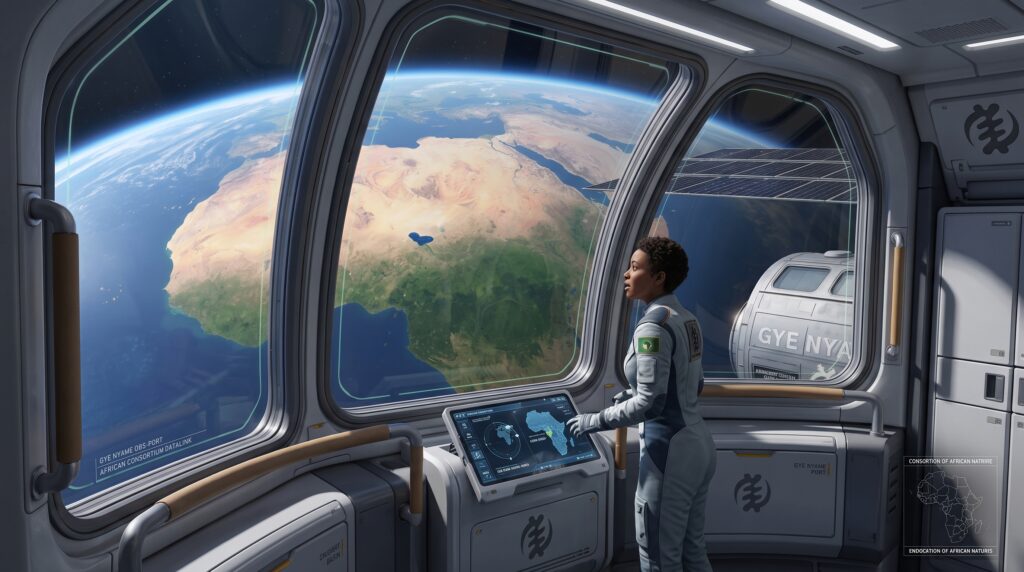
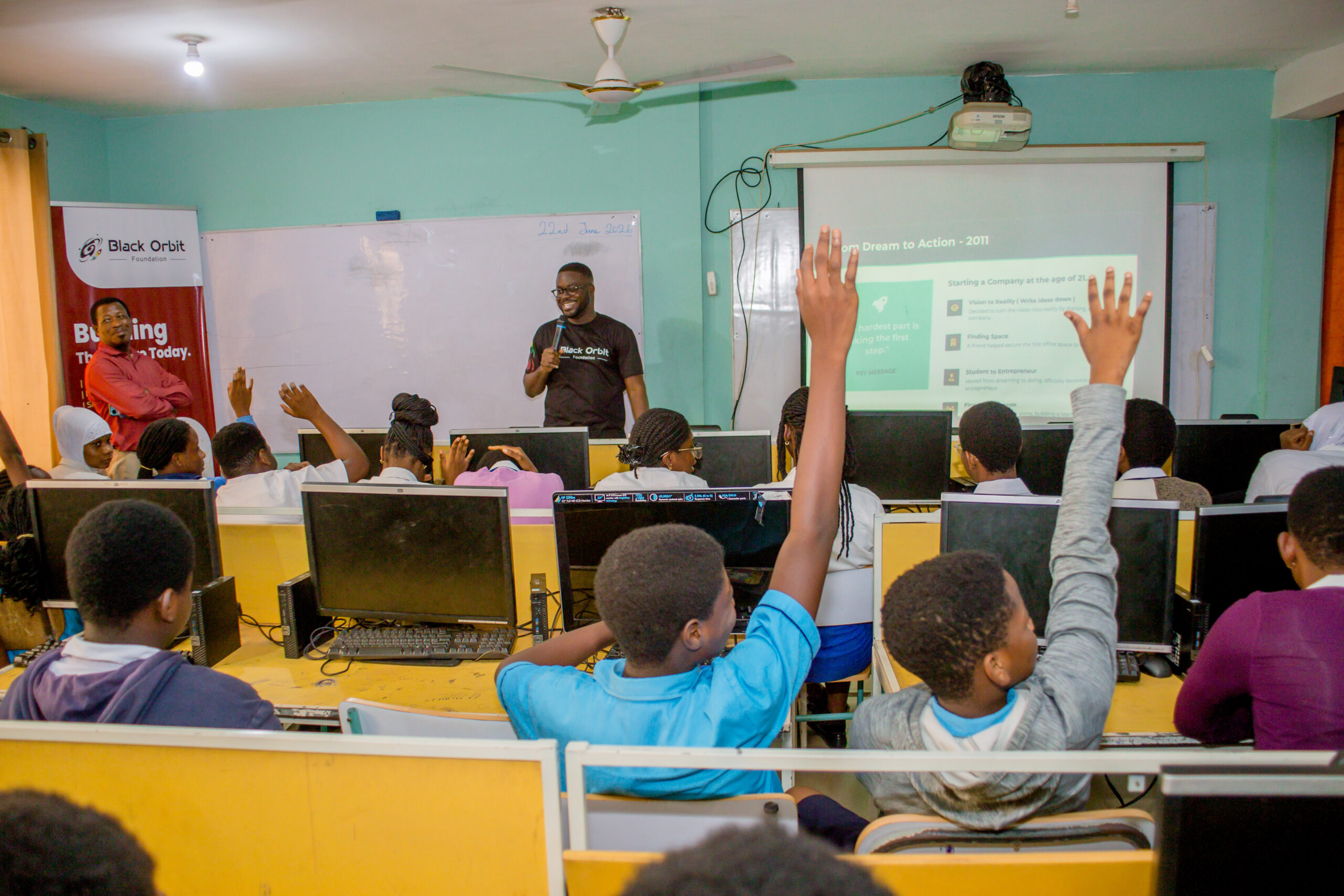
The proposed African segment of the commercial space station could also include an education and outreach centre designed to inspire young people across the continent. Nearly 60 percent of Africa’s 1.59 billion people are under the age of 25. Through live video links and interactive broadcasts, astronauts could connect with classrooms in all 54 African countries. Imagine a child in Accra, Dakar or Kinshasa speaking directly to an African astronaut in orbit; someone who looks like her, shares her heritage, and shows her that she, too, has a place in humanity’s future in space.
That sense of possibility would extend beyond the laboratory’s research and educational programmes; it would also be reflected in the names and symbols that define the space.
The last part of the Gye Nyame segment will be the Jua Node. Jua is a Swahili word meaning “Sun.” The Sun is the source of light, energy, and life for our planet, making it a powerful symbol of knowledge, discovery, growth, and possibility. This node will be the connecting gateway to the African segment of the space station.
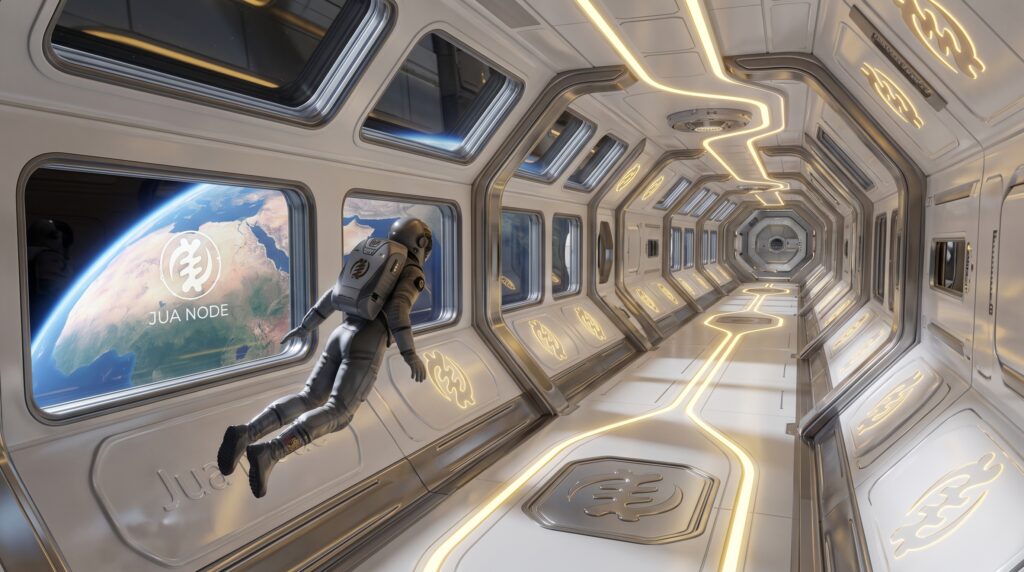
None of this exists yet. It is a vision, not an actual space-station module. By presenting it through a detailed simulation, however, we can make the idea feel close enough to touch. The goal is to inspire a generation of young people to grow up believing that Africa belongs in space, and to use that belief to build differently here on Earth.
A future African facility in orbit could provide astronauts and researchers from the continent with a practical base for conducting experiments and applying knowledge developed through years of study. The experience gained there could also help prepare them to participate in future missions to the Moon, Mars, and beyond.
Establishing such a facility could foster greater cooperation among participating African nations. It would encourage countries to learn, explore, and conduct research together in ways that benefit the entire continent. Africa’s approach to innovation is shaped by its circumstances. Across the continent, communities face challenges such as unreliable electricity, water shortages, limited infrastructure, and uneven internet access. Despite these obstacles, African innovators continue to create locally relevant solutions in healthcare, agriculture, financial technology, and other fields.
So, where do we begin?
We can start by engaging the private companies expected to lead the next era of commercial space stations after the ISS is retired. We must understand what is technically possible, what it might cost, and how African governments, scientists, universities, businesses, and communities could contribute.
It is my firm belief that Africa should not be left out of this next chapter of human space exploration.
We have developed a 3D conceptual model of this proposed African facility, which we call the Gye Nyame Space Station www.gyenyame.blackorbit.org to explore the simulation and experience the vision for yourself.
If you have ideas or would like to contribute to this vision, please email me at rowusu@blackorbitfoundation.org.